







Why Go To Market Strategy Breaks Before Execution
And What Better Decision Design Looks Like
When go-to-market strategies fail, execution is usually the first thing blamed.
The reality is less comfortable.
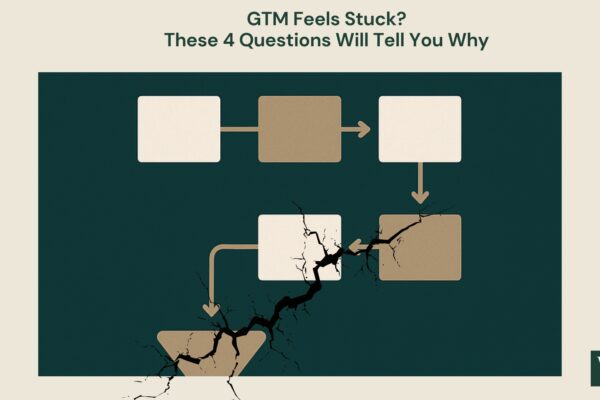
Most GTM efforts break upstream, long before campaigns launch or sales teams engage. They break at the decision level.
Decisions about where to focus, who to prioritize, and what to say are often made too early, with too little structure, and then carried forward unquestioned.
Once those early decisions calcify, execution simply amplifies their weaknesses.
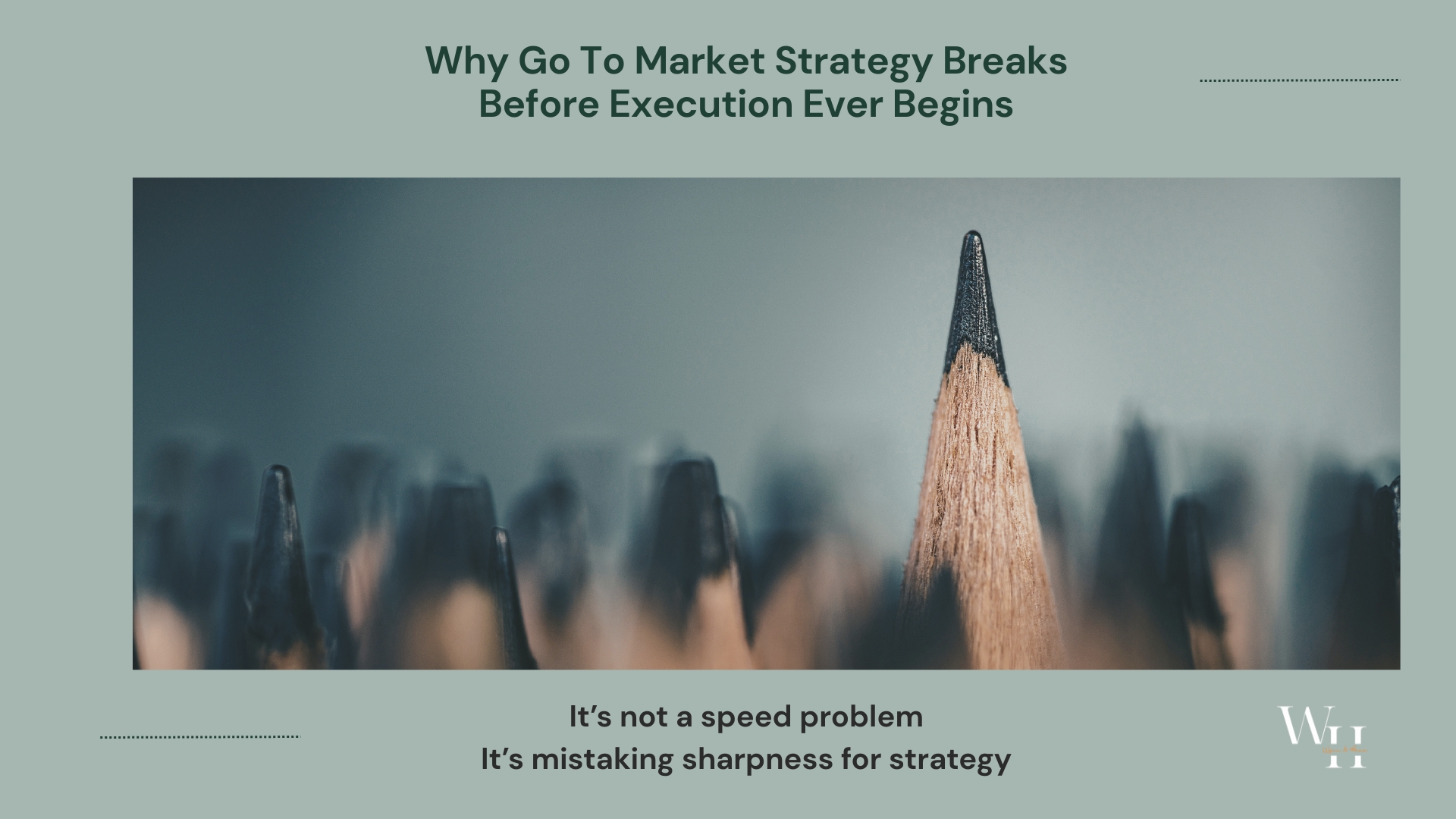
This is not a speed problem.
It is a decision design problem.
Where GTM Actually Goes Wrong
Teams move fast, but the sequence is wrong.
Market assumptions are treated as facts.
ICPs are defined broadly to avoid being wrong.
Targeting becomes noisy.
Messaging tries to appeal to everyone and resonates with no one.
More activity does not fix this.
It only increases cost.
What We See in Real Markets
At Wynn & Howe, we see this pattern repeatedly—especially in complex and regulated markets where the margin for error is small.
The teams are capable.
The products are sound.
What is missing is a structured way to slow down the right decisions and accelerate the rest.
Where AI Actually Helps (And Where It Doesn’t)
This is where AI becomes genuinely useful.
Not as a replacement for strategy, but as a way to redesign how decisions are made upstream.
AI is exceptionally good at surfacing:
- Options
- Patterns
- Alternative market truths
What it cannot do is decide:
- Where to play
- What to ignore
- How to sequence focus over time
That remains a human responsibility.
A Better GTM Decision Sequence
Our GTM operating system uses AI to compress the research and synthesis phase, then applies judgment at the decision points that actually shape outcomes.
We begin by establishing market truth:
- What problems exist
- Who experiences them most acutely
- What buyers are already doing to cope
We then map market size and shape to understand where revenue is realistically accessible—not just theoretically available.
From there, we define ICPs with precision, not to narrow ambition, but to sequence it.
Only then do we move into:
- Account sourcing
- Targeting logic
- Messaging
By this stage, execution is no longer guesswork.
It becomes a natural extension of prior decisions.
Each step exists to reduce downstream noise.
Why This Matters Now
The outcome is not perfect certainty.
That does not exist.
The outcome is fewer untested assumptions making it into execution.
In today’s environment, this matters.
Markets are crowded.
Buyers are distracted.
Teams are lean.
GTM is no longer forgiving of fuzzy thinking upstream.
The organizations that win are not the ones moving fastest.
They are the ones designing better decisions before they move at all.
Execution becomes easier when the hard thinking is done early.
That is what this approach is designed to do.